
The Evolution of Bayern Munich: Premium Logo History Infographic (1900-2024)
Product Details
Size
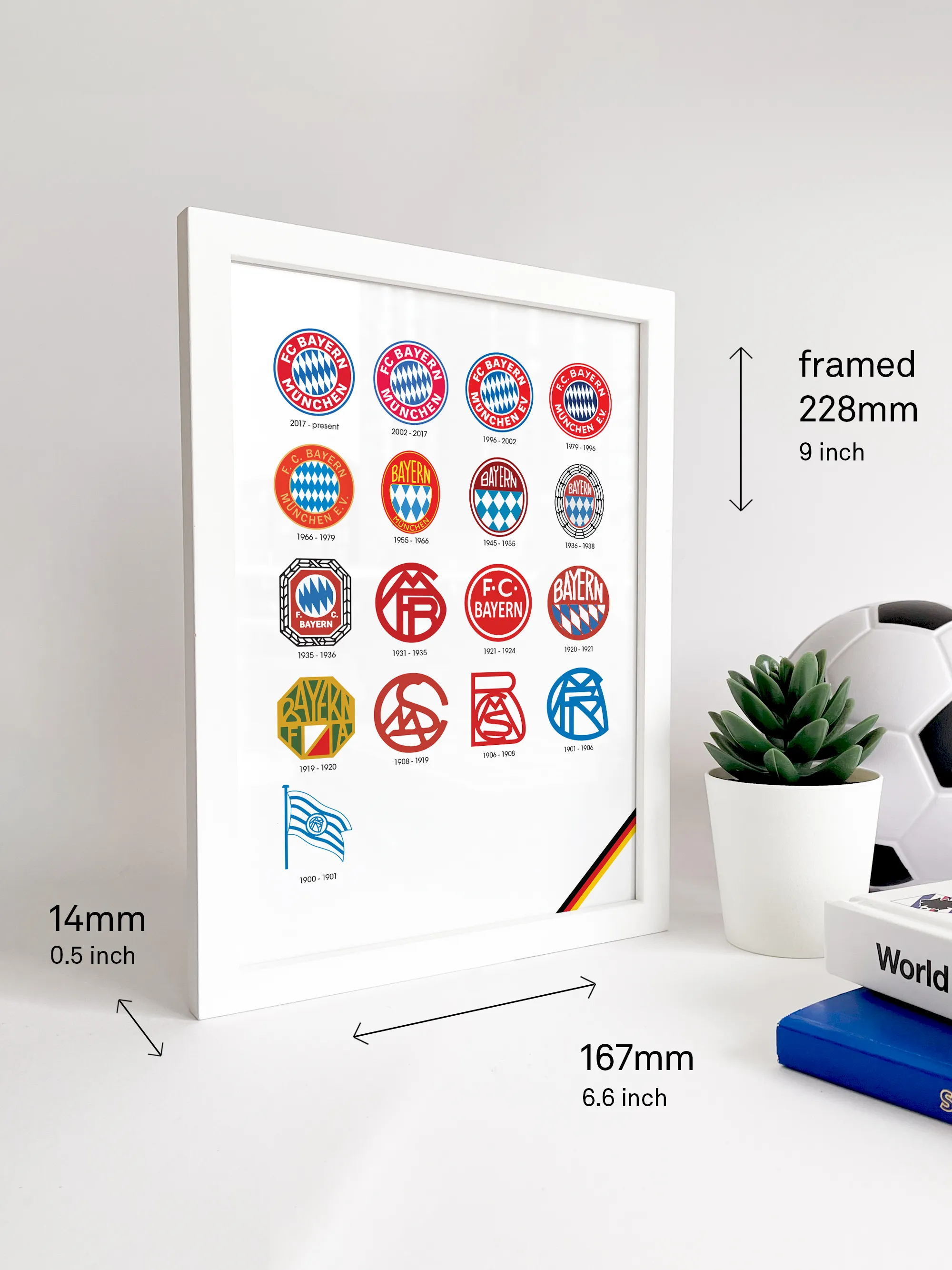
Framed A5: 167 × 228 mm / 6.6 × 9 inch
Unframed A5: 148,5 × 210 mm / 5.8 × 8.3 inch.
Frame / Unframed
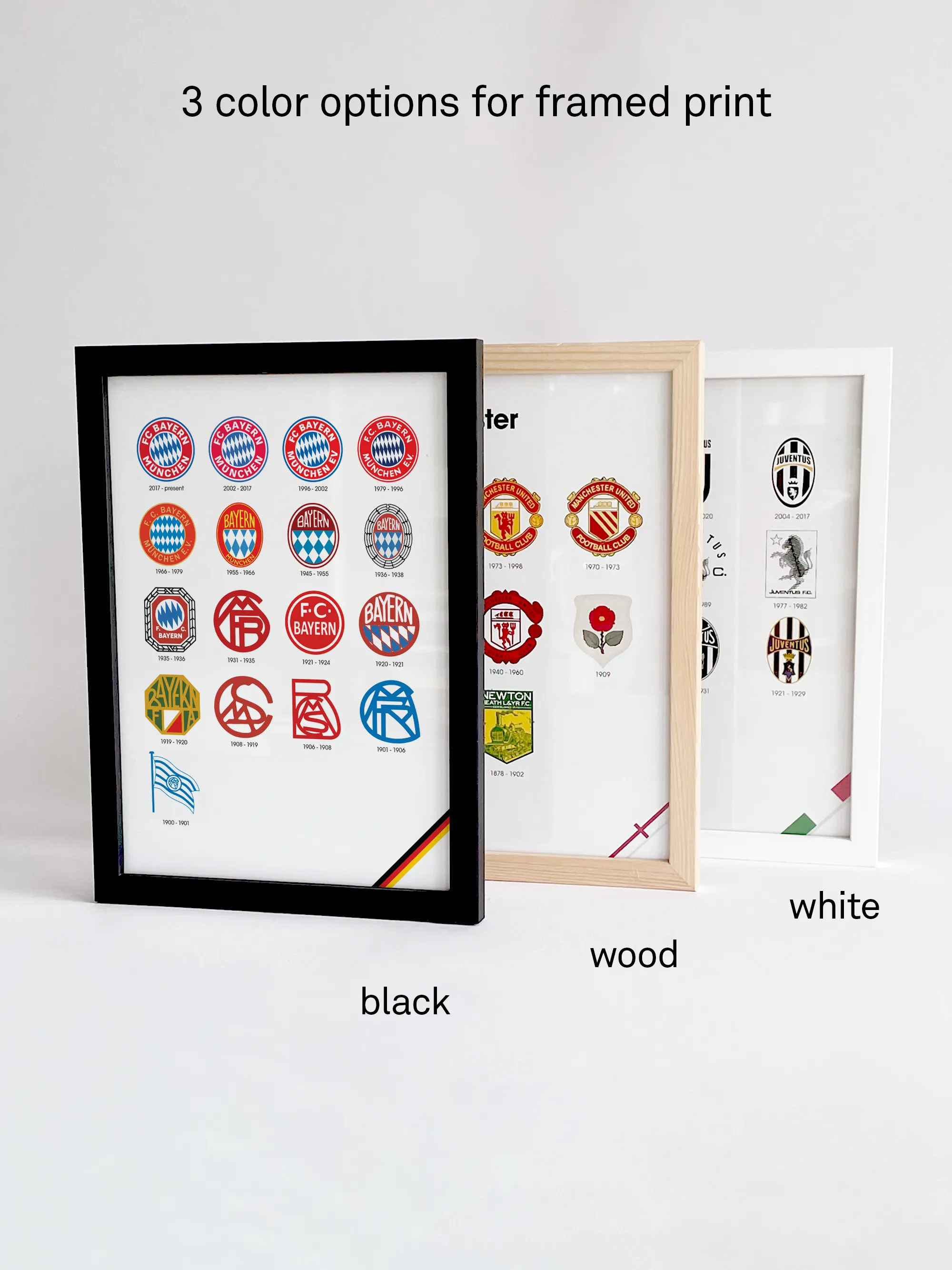
With a framed print you'll get a premium FSC®-certified pine wood frame with glass that can stand upright or hang on a wall. Optional colors in black, white and wood.
Paper
300 g/m² matte coated paper.
Gift wrap
Neatly wrapped with durable paper and a ribbon so you can send your gift directly to that special person.
Shipping & Returns
Shipping
Orders ship within 2–5 business days from the Netherlands. Unframed prints: €4.90 NL / €9.90 EU / €14.90 ROW. Framed prints: €6.90 NL / €9.90 EU / €24.90 ROW. Free Worldwide Shipping on all orders over €75.
Delivery
EU: 3–7 business days. UK/US/CA: 5–12 business days. Rest of world: 7–21 business days.
Returns
30-day hassle-free returns. If you're not satisfied, contact us for a full refund or exchange.
124 Years of Bavarian Football Identity
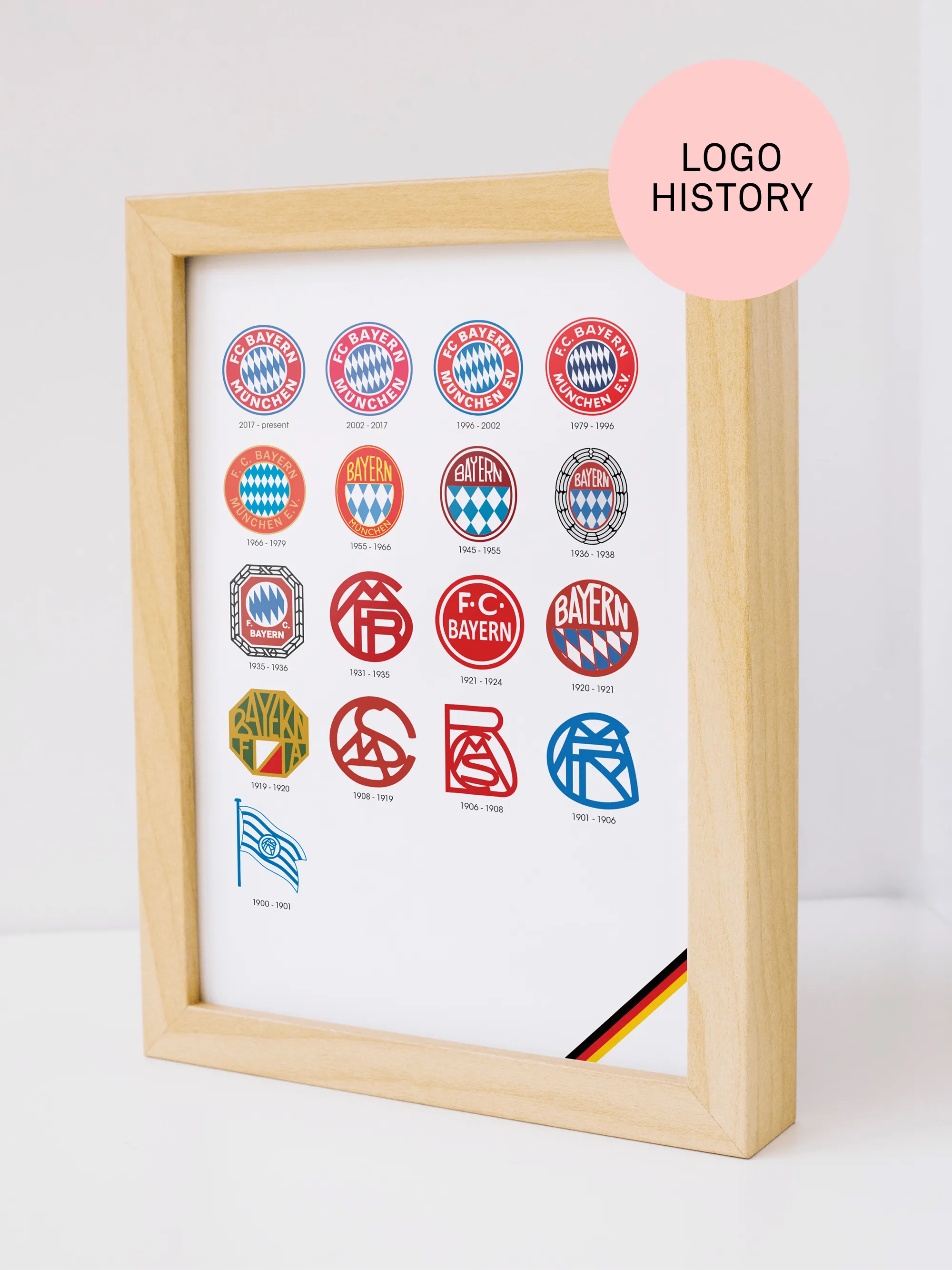
FC Bayern München was founded in 1900 in Schwabing, Munich—an origin still visible in the club's earliest monograms and letterforms. This poster traces that first identity language through Kurt Landauer's presidency, the turbulence of mid-century Europe, and the gradual evolution toward a circular badge system built for global recognition.
The iconic blue-and-white diamonds—derived from the Wittelsbach coat of arms—became inseparable from Bayern's crest in 1954. Every refinement since reflects the club's Mia San Mia philosophy: disciplined, confident, unmistakably Bavarian.
Hand-restored for collectors
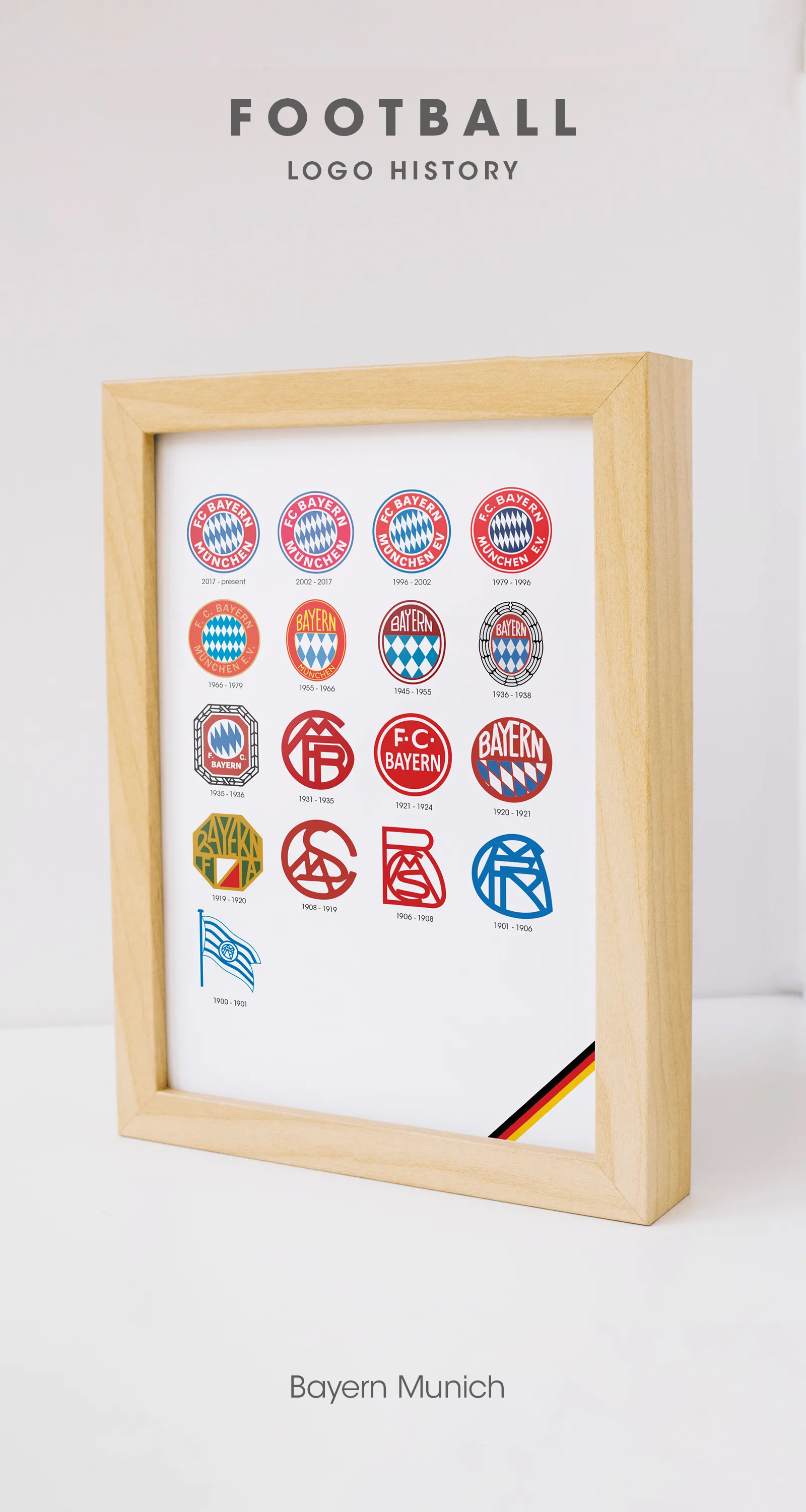
Every badge in this timeline was digitally restored to preserve the fine details that don't survive low-res reproductions. From the 1900 Art Deco monograms to the 2017 refinement, each mark is rendered at print-ready fidelity. For the full history—see the reference section below.The Monogram Era
Intricate Art Deco initials defined the early 1900s before the shift to a circular silhouette.
Bavarian Diamonds
The Wittelsbach coat of arms diamonds were permanently integrated into the crest in 1954.
The 2017 Refinement
Tightened geometry and optimized color for high-fidelity digital and print displays.

Ready to frame or gift
Choose from black, white, or oak wood frames—each FSC®-certified with glass and a built-in stand. Add gift wrap for a ribbon and personal note, ready to send directly to any FCB supporter.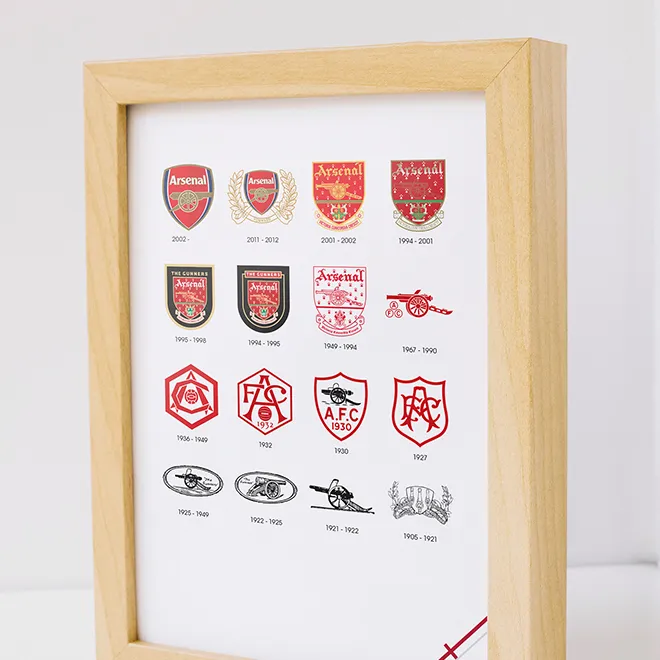
The Story of the Bayern Munich Logo: A Collector's Reference
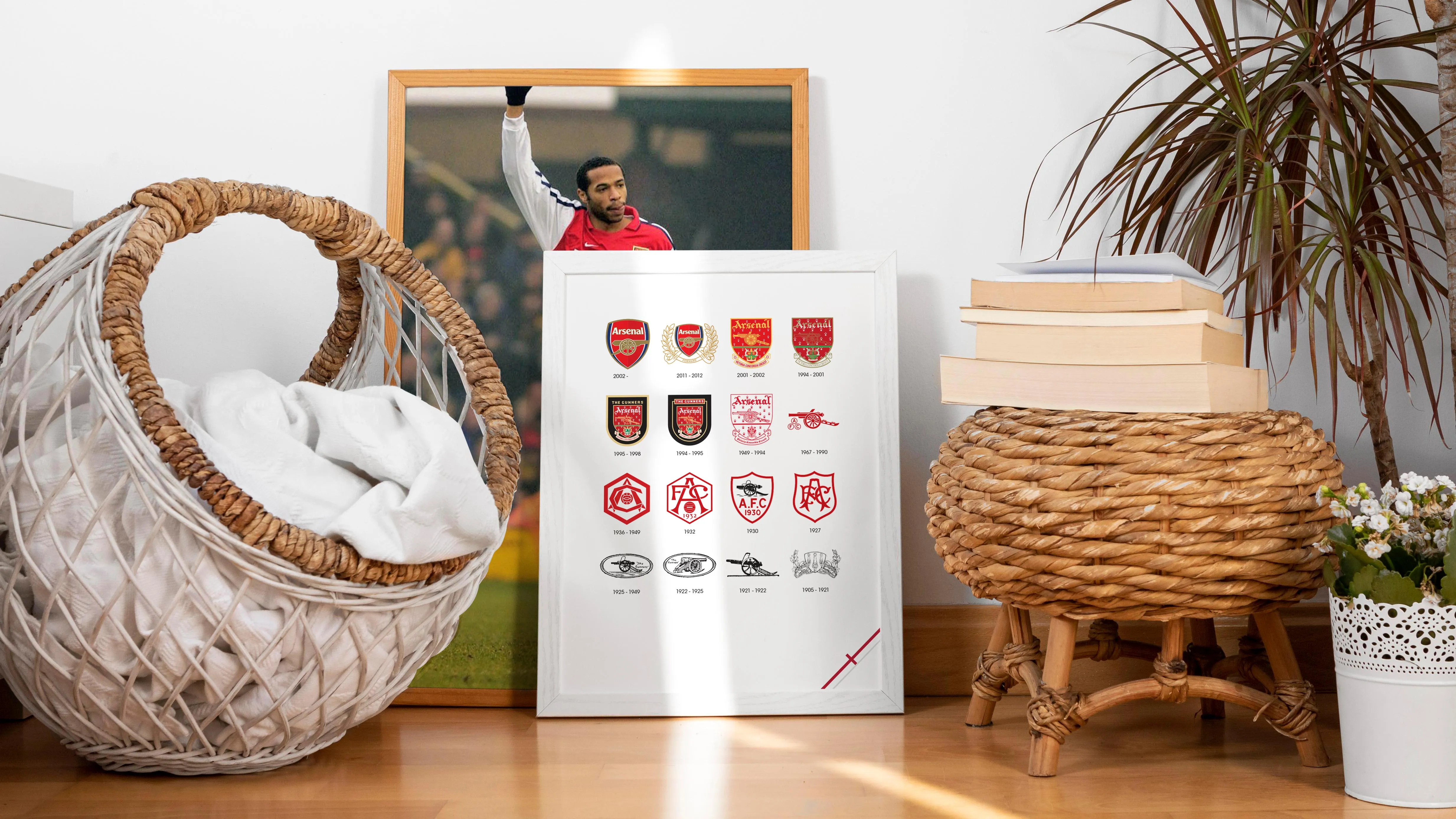
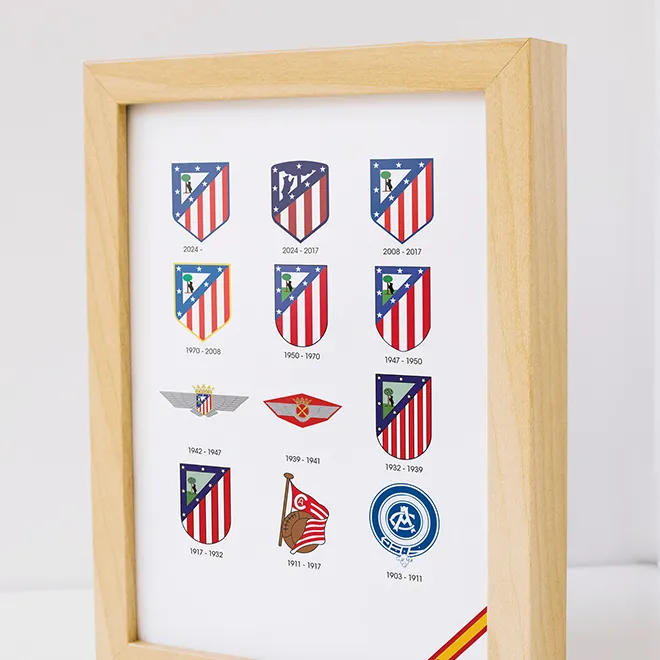
Bayern poster: A visual history of FC Bayern München logo evolution
Kurt Landauer & the Survival of a Badge
Under the legacy of president Kurt Landauer, Bayern's identity matured alongside the club's culture. Through the turbulence of the 1930s–40s, the club's visual system endured—then returned with renewed clarity as Bayern rebuilt and reasserted its presence in German football.
Diamonds (Rauten), "FCB", and Lettering Shifts
The iconic blue-and-white diamonds—derived from the Wittelsbach coat of arms—became inseparable from Bayern's crest language, and were permanently integrated into the badge in 1954. Across decades, the "FCB" lettering and surrounding typography shifted in weight, spacing, and proportion—small refinements that signal bigger changes in era, ambition, and reproduction constraints.
2017 Refinement for High-Fidelity Print & Digital
The 2017 refinement optimized the crest for high-fidelity digital and print displays—tightening geometry and improving color behavior so reds, blues, and whites render cleanly across screens, embroidery, and paper.
Museum-Grade Specs
Printed on museum-grade 300g/m² matte stock to minimize glare and preserve detail at close viewing distance. Finished to Amsterdam studio quality—built to live like a quiet gallery piece, not disposable merch.